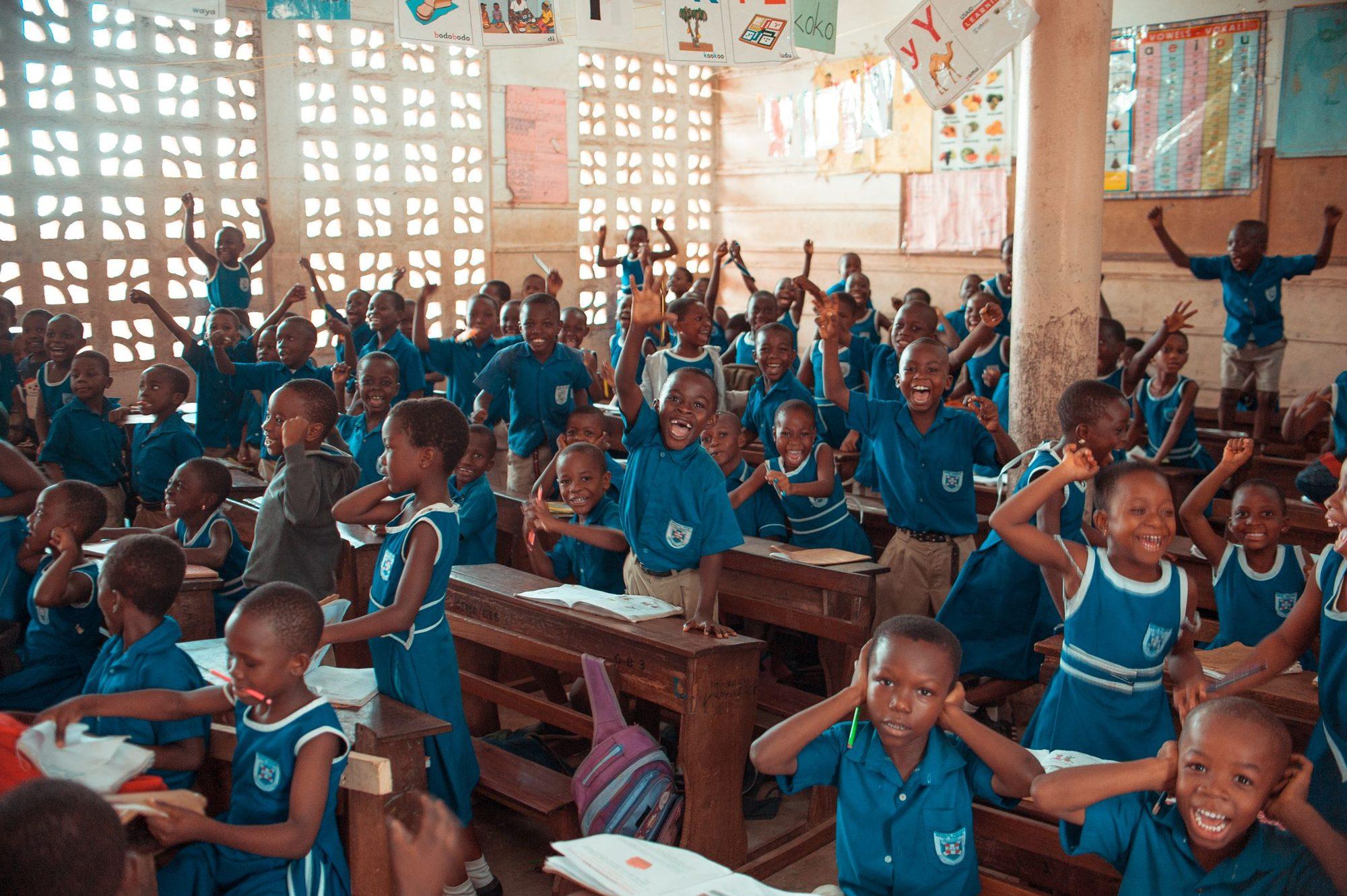
Put a whole classroom into business.
Banks, telecoms and foundations can sponsor a school cohort. For 12 weeks every child runs a real small business and saves from every sale. The school pays nothing, and neither do the parents.
50
children, each running a business of their own
What a sponsor gets.
You sponsor one school, or ten. Each child runs a real business and saves at your institution, and you get the record of it.
Savings accounts, opened at enrolment
Each child’s account is opened at your bank with your existing children’s product. The parent operates it and the child is the beneficiary.
Monthly deposits from the children’s sales
After every paid sale the child is asked to save a share, 20 percent unless the cohort sets another rate. The parent confirms each deposit in the app.
A market day and a graduation under your name
Children sell at a school market day, then graduate with certificates co-signed by you. Your staff are welcome as mentors on both days.
A cohort report
Accounts opened, first deposits, live shops, orders, paid sales and the share saved, counted by the app, not by survey. Delivered within 14 days of graduation.
Your name sits on the certificate, the ceremony and the parent materials, never inside the child’s game screens.
Twelve weeks, one school.
One school, 50 children, 12 weeks. We bring the school, the teacher’s session page and the report. You bring the accounts, the seed grants and two volunteers for market day.
- 01
Pick the school
We propose a school from our network, or you name one. One sponsor per school for the programme year.
- 02
Enrol and open accounts
Parents consent and enrol. Each child’s account opens at your bank and the seed grant goes in.
- 03
Four Saturday sessions
Spot the need, make it and price it, sell it and record it, pitch and celebrate. A teacher runs each one from the session page.
- 04
The shops keep selling
Sales are paid to the parent’s telebirr. After each sale the child saves 20 percent into the account.
- 05
Market day and graduation
Under your name, with parents in the room.
- 06
Wind-up and report
The seed grant is repaid, the child keeps what they saved, and your cohort report arrives within 14 days.
What you see, while it happens.
The sponsor view updates as the children sell and save. It counts what the cohort built, not who logged in, and it shows totals only.
Sponsor view
Grade 7, example school
- Children enrolled50
- Accounts opened46
- First deposits38
- Children with a live shop31
Paid sales by week
- Paid sales
- 18,640 ETB
- Share saved
- 3,728 ETB
- Seed granted / repaid
- 50 / 0
Example figures for one cohort of 50. Sponsors see totals, never a child’s name, contact or account number.
Seats, and what they cost.
Move the slider. Every 50 children is one school cohort.
- Children reached
- 50
- School cohorts
- 1
- Programme fee, 500 ETB a child
- 25,000 ETB
- Seed grants, 300 ETB a child
- 15,000 ETB
- Comes back at wind-up
- 15,000 ETB
- Your cost per child, after the seed returns
- 500 ETB
- Accounts opened at your bank
- 50
Indicative prices, to agree with the first sponsor. The programme fee covers the app, the teacher’s session page, the sessions and the report.
How the seed grant comes back.
Your seed grant goes into each child’s account at enrolment.
The child starts a small business and sells.
20 percent of every sale is saved into the same account.
At wind-up the seed grant is repaid. The child keeps what they saved.
Per child: 300 ETB goes in, 300 ETB comes back. The savings stay with the child.
Tested with real children, in real schools.
The pilot was free, run with 4H Ethiopia, now Memhir Institute. The sponsored programme builds on it.
- 300+
- students reached in the pilot
- 15
- schools
- 36
- letters of intent
- 90%
- completed it with an instructor in the room
- Over 70%
- did something real, beyond the game
15 of the 36 signers committed to a paid subscription or a paid pilot.
One student told me after the pilot: ‘I used to think only people from rich families could own businesses. Now I know it’s about making the right decisions.’I have taught economics for nine years. This is the first time I have seen students voluntarily stay after class to continue a lesson.Questions sponsors ask.
The sponsor pays a programme fee per child and provides the seed grants. The school pays nothing, and neither do the parents.
Our vision
Every young person in Africa grows up knowing they can create opportunity, not just wait for it.
Turning Job Seekers into Job Creators.
Tell us about your programme.
A short note is enough. We will reply with what a cohort could look like for you, usually within two working days.
Or write to us directly